

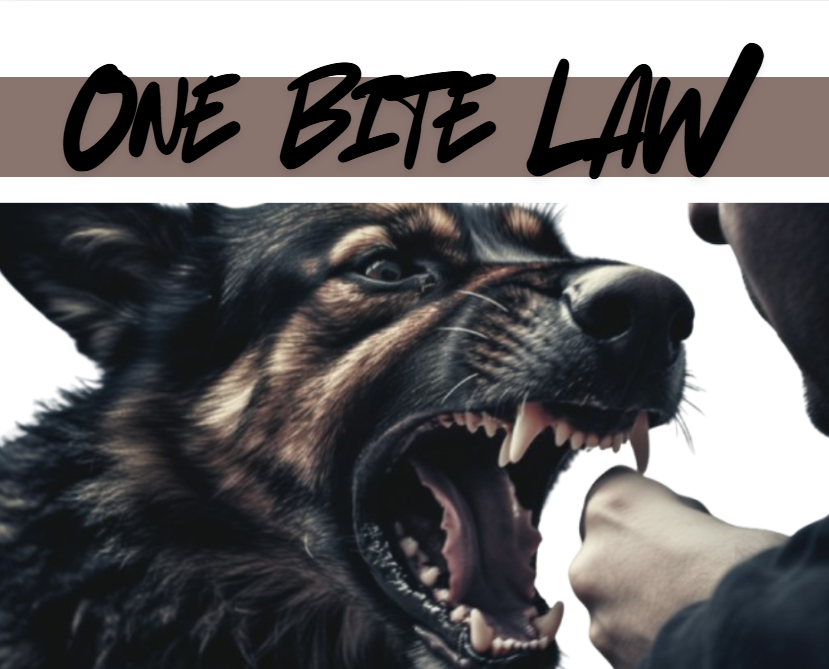
Enacted in 1989, the Texas One Bite Law protects owners from liability when their dogs attack unsuspecting victims. Dog bites can cause severe injuries and emotional trauma to people of any age, and unlike some states who enforce strict owner liability, Texas’s One Bite Law makes legal action more complex. This law holds owners liable if their dog had previously bitten someone or if the owner’s negligence caused the plaintiff’s injuries. Otherwise, the first incident is typically treated as an accident, leaving the victim responsible for the resulting damage.
I believe that the Texas One Bite Law should expand protections for victims, or at the very least, the owner should be held partially liable.
I recently was bitten by a canine on both of my legs, leaving me struggling to do everyday tasks like walking, showering properly, going to school and even spending time with my family. Not only did this experience lead me being rushed to Urgent Care, I have been horrified with the thought of stepping outside for a walk since. At that time, my family and I didn’t even know the Texas One Bite Law existed until we started to proceed with our legal action against the owner. Although they apologized, they claimed that they would not be liable because it was the dog’s first incident with aggressive behavior.
No matter the breed, canine teeth carry harmful bacteria that can seriously worsen the effects of a bite. When an attack occurs, victims are not just dealing with the pain in the moment – they also have to worry about infections, scars and long lasting fear. According to the law, meaningful legal action may not be taken until after a dog has already shown previous aggression in a different incident, leaving first-time victims especially vulnerable. This means that someone may have to go through significant physical and psychological harm before an owner can be held fully accountable, placing an unfair burden on those who had no warning.
The law can also encourage negligence by letting dog owners avoid responsibility, at least the first time something goes wrong. If owners know they won’t be held fully responsible for their dog’s first aggressive incident, they may not feel as pressured to properly train, restrain or monitor their pets. This lack of accountability can lead to careless behavior, increasing the chances of preventable attacks. In the end, it’s not just about one incident-it creates an environment where owners aren’t pushed to take the precautions needed to keep others safe.
The legal process places the burden of proof on the victims, making it much more complicated for them to seek justice. Instead of simply holding the owner liable, victims often have to prove that the dog has a history of aggression or that the owner knew it was dangerous. This can be difficult, time-consuming and expensive, especially for someone already dealing with injuries and recovery. In fact, according to the World Health Organization, dog bites are far more common than you think – about 4.5 million people are bitten each year in the United States, and nearly 1 in 5 of those cases require medical attention. With such a high number of serious incidents, adding extra legal barriers only makes it harder for victims to get the compensation and accountability they deserve.
Some people defend the Texas One Bite Law by stating that it gives owners a reasonable second chance and recognizes that every dog bite does not reflect true aggression. While that may be true, I am simply advocating for more nuance in the application of the law on a case by case basis. In one situation, a dog may react after being provoked by the victim. In another, the bite could be accidental during play with no intention to harm. In a third, the incident may result from an owner’s failure to properly supervise or control their dog. But that is exactly why the law should not just excuse the first incident. Instead of giving owners automatic protection, the law should investigate what caused the situation in the first place. Letting the first bite slide ignores the risk of serious harm and delays liability when it should exist from the start. At bare minimum, owners should be financially liable for medical expenses, especially in cases where the animal was unprovoked.
The Texas One Bite Law leaves victims vulnerable, excuses negligence and makes justice harder to achieve when it matters most. It’s time to stop waiting for the first bite – when one is too many.